A guest book for a baptism: how to collect the family's messages
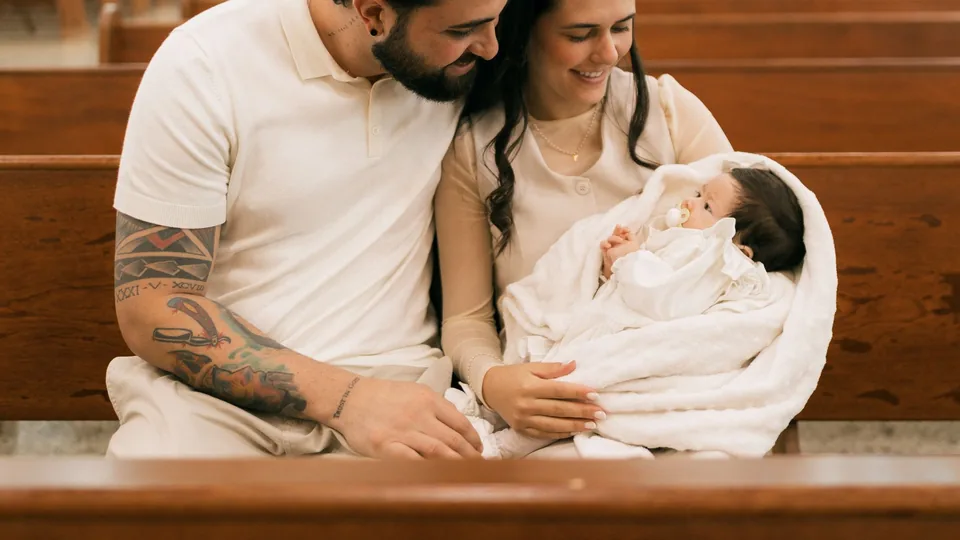
At a baptism, the guest of honor has no idea what is going on. They sleep, eat, cry for a bit and fall asleep again. Everything that happens that day is lived by everyone else: the parents with their mix of exhaustion and emotion, the godparents trying on a new role, the grandparents watching in a very particular way, and the aunts and uncles taking photos that will stay on their phones.
That is why a baptism guest book means something different from the one at other celebrations. It is not about recording that you were there. It is about writing to someone who cannot read yet, so they can read it many years from now.
Writing for someone who will read much later
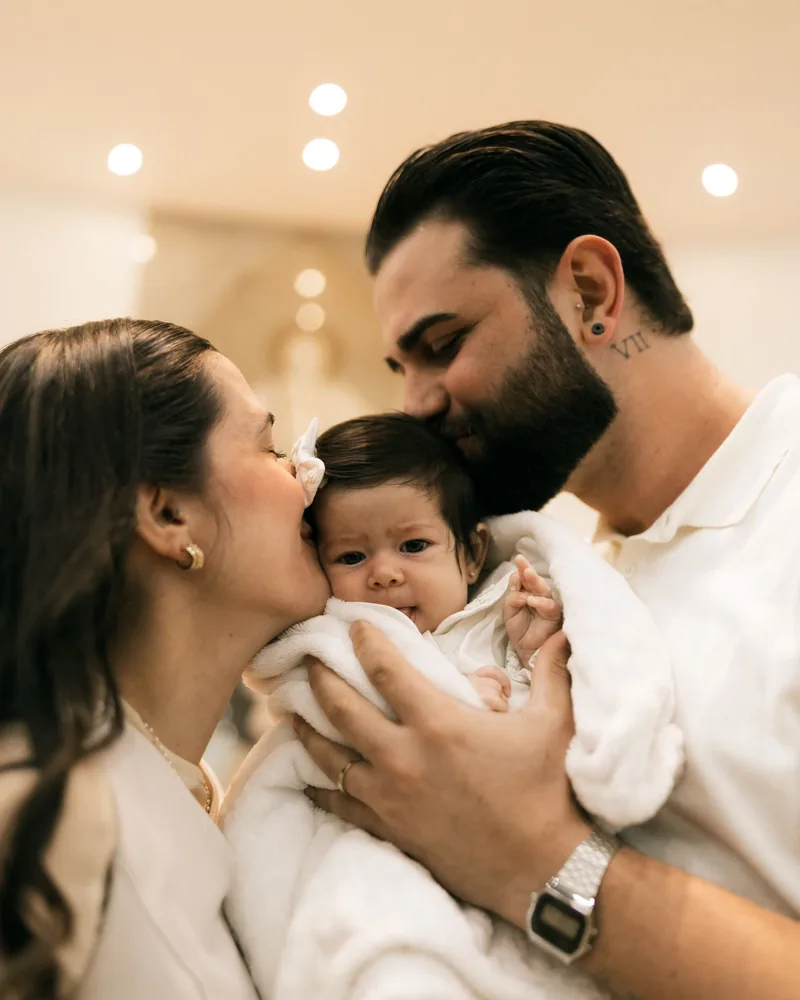
Put that way, people write better. The tone changes. A guest you ask for a signature writes their name and little else. A guest you tell "write something for when they turn eighteen" stops to think.
That is the angle to explain in the invitation or on the card you leave on the table: this is not a book about the day, it is a group letter with a far-off opening date. If there was a baby shower before the birth, the same idea can start there, as explained in baby shower guest book.
It works especially well with:
- The parents, who can tell what the wait was like and what home is like now.
- The godparents, who usually write about the commitment they take on that day.
- The grandparents, who tend to look back and name the whole family.
- Aunts, uncles and cousins, more informal, with stories and simple wishes.
- The parents' friends, who talk about the world the child will grow up in.
What each person can write
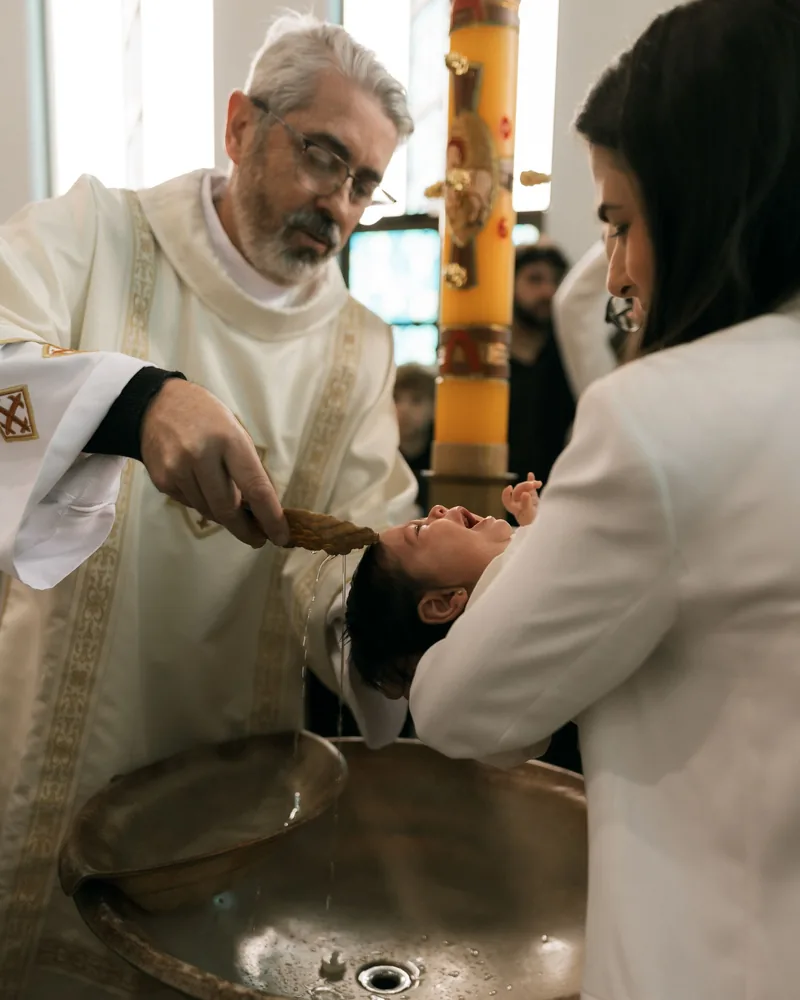
Not everyone has to write the same thing. In fact, the charm is that they do not.
The parents. A message that tells the day from the inside: who came, what was served, what was said, what the house was like that morning. Domestic details age very well.
The godparents. This is usually where the most solemn words appear, and that is fine. One specific promise (to be there, to be available, to tell the truth when it is needed) is worth more than a pretty, generic line.
The grandparents. Ask them for something specific: what their own childhood was like, which family tradition they would like to see kept, who the baby takes after. Beautiful texts come out of that.
Aunts, uncles, cousins and friends. Wishes, gentle jokes, promises of future plans. No need to correct their tone.
If you need more starting points, the guide on what to write in a guest book works here too, with the examples adapted to a baptism. And there are thirty ready-made lines in baptism guest book messages.
The usual problem: the book on the table
A paper book on a table depends on people seeing it, remembering it, finding the pen and having a quiet moment. At a baptism that is hard: the celebration tends to be short, there is a meal involved, children on the move, and part of the family lingering to talk outside the church.
In the end the same people as always sign, and the messages that would have meant the most are missing.
A digital guest book solves that specific part. Guests scan a QR code or open a link on their phones, write their message and send it. They do not install an app or create an account. You can see it on the digital baptism guest book page.
That changes two things. First, people can write sitting down, unhurried, at any point during the meal. Second, those who could not come take part too: just text them the link.
The photos the family takes
A baptism produces an enormous number of photos that never get anywhere. Grandpa holding the baby, the cousins out in the yard, the table before it is cleared, the family christening gown if there is one.
Each person can add one photo to their message. It does not replace the photographer, if there is one, but it captures something else: the view from the inside, not the professional's.
It helps to suggest something specific. "Add a photo of you with the baby" gets better results than "add a photo."
Where to put the QR code
Placement matters more than design. The code should be where people are already looking or waiting:
- On the welcome table at the restaurant.
- On each table, next to the centerpiece.
- On a card beside the paper book, if there is one.
- On the favor or keepsake card you hand out.
- In the family group chat.
And with a line that explains what it is for: "Write something for when they are older." It works better than "sign here."
Paper and digital at once
You do not have to choose. Many families keep the classic book for those who enjoy writing by hand and add the QR code for everything else. Each format reaches a different kind of guest, and the end result is more complete than either one alone.
The approach is similar to what works at other family celebrations. To see it applied to another case, the article on the First Communion guest book with a QR code explains in more detail the part each group of guests plays.
When to share the link and how long to give people
It is worth sharing the link a few days ahead. Relatives who live far away write then, without hurry, and the book reaches the day of the baptism with content already in it, which encourages everyone else.
During the celebration, the QR code catches what comes up in the moment. And in the days after, people add the photos they find when they go through their phones, which are nearly always the best ones.
Calling it done that same day leaves a lot out: the link stays open, so wait a few days before you download it.
A keepsake that gets read later
The value of all this is not on the day of the baptism. It is in the moment, many years later, when that person reads what was written to them before they even knew the world existed. Some of those who signed will no longer be around. Others will have changed. The text stays the same.
That is why it is worth asking for real messages and not token signatures.
If you are organizing the baptism, you can set up the digital guest book ahead of time, share the QR code with the family and let each person write from their phone.
Related articles
Baptism guest book messages: 30 examples and how to write your own
Lines for parents, godparents, grandparents and friends, and a three-step formula so your message does not sound like a greeting card. Written to be read when the child is older.
7 min
Baby shower guest book: messages, advice and predictions for the parents-to-be
A baby shower is the last party before the baby arrives. How to turn the guests' messages, advice and guesses into a book the parents will read in peace, and one day the child will too.
8 min
A guest book for a wedding anniversary: messages and photos from the people who were there
A silver or golden anniversary brings together people who were at the original wedding and people who came along later. How to collect their messages and old photos in one book.
8 min